Who comes near your hives
People and vehicles entering the apiary out of hours. It is the evidence you need when a hive disappears, and often the deterrent that stops it disappearing.

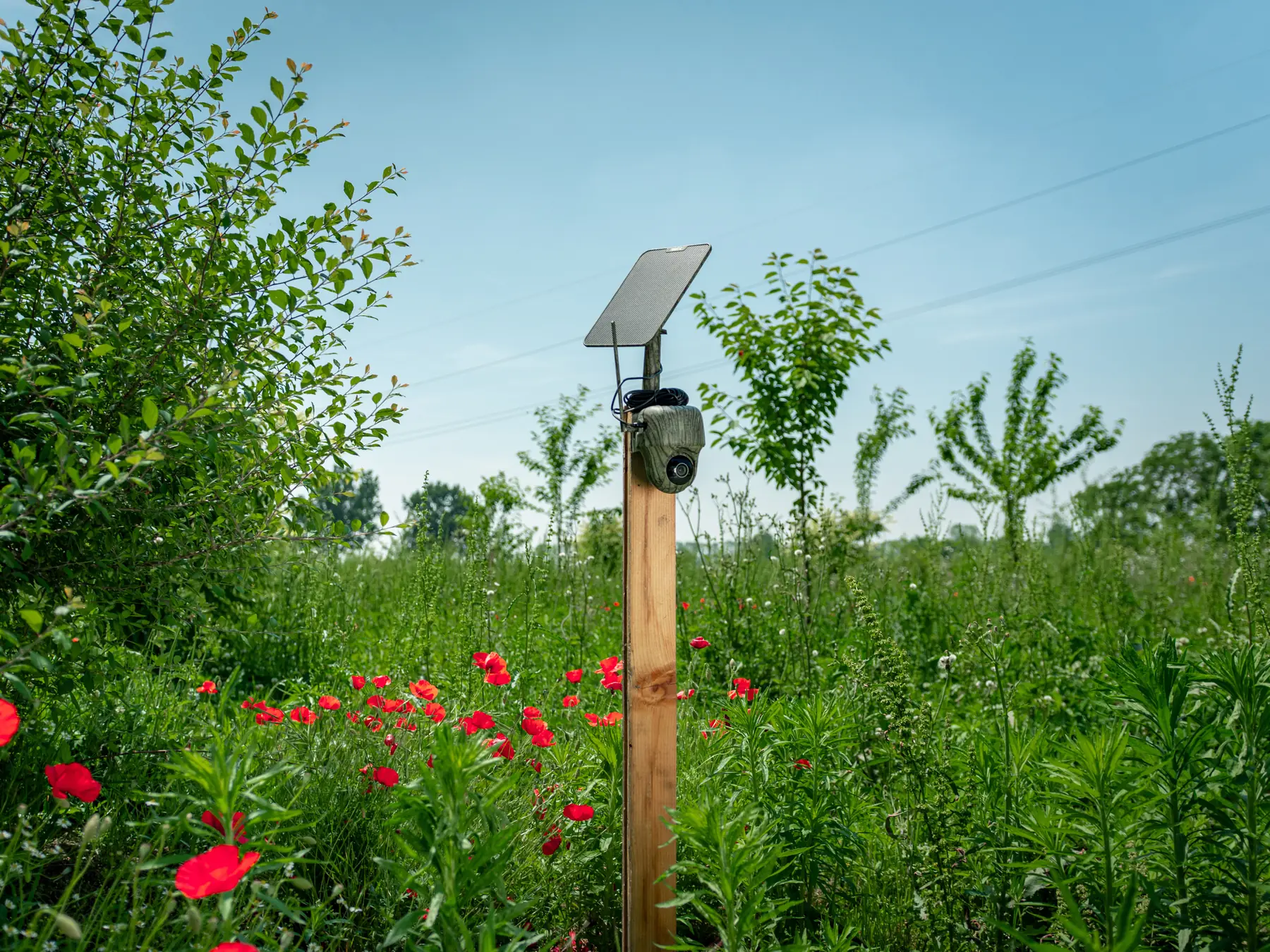
4G camera trap for apiaries
It records day and night, sends a notification to your phone and works where neither power nor wifi reach: built-in 4G and a solar panel.
What it records
02 / 07
An apiary is almost always somewhere remote, and nobody knows what happens there when you're not around. The camera trap tells you.
People and vehicles entering the apiary out of hours. It is the evidence you need when a hive disappears, and often the deterrent that stops it disappearing.
Wild boar knocking hives over, badgers and martens working on them at night and, where they live, bears and wolves. You know which animal you are dealing with before deciding how to protect yourself.
Snow, flooding, a fallen tree, the gate left open. It saves you trips made just to check that everything is fine.
Watching activity at the landing board during the day tells you a lot about colony strength and how the bloom is going.
If you have helpers or the apiary stands on someone else's land, you know when someone touched it and what they did.
Infrared lighting records in the dark with no visible light, so it does not scare animals or give away the camera.
The product
03 / 07
An autonomous camera that lives in the apiary all year round.
You fix it to a tree or a pole and it stays there. It needs no power because it recharges from a solar panel, and no wifi because it has built-in 4G: it sends pictures even from an apiary in the middle of the woods.
When it detects movement it records and sends a notification to your phone. At night it records with infrared lighting, which gives off no visible light.
We check the camera trap's status remotely: battery charge, voltage, current, temperature, charging status and firmware version. If a camera stops charging or is running low, we notice before it switches off.
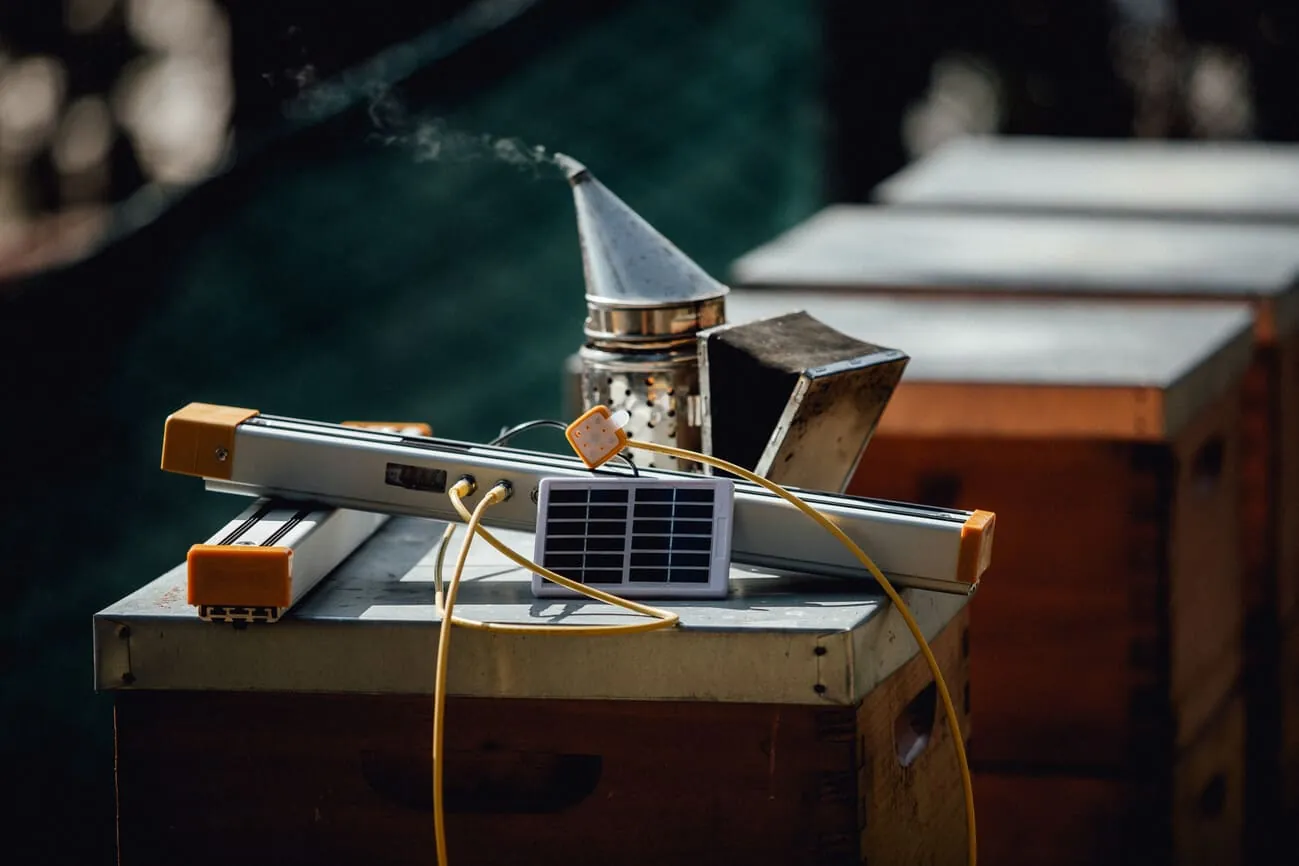
The scale tells you the weight dropped during the night. The camera trap tells you who did it.Together, they are real theft protection for a remote apiary
The flow
04 / 07
The sensor triggers when something enters the frame. At night it switches on the infrared lighting.
The clip goes out over the mobile network, no wifi needed. No need to go to the apiary to collect the memory card.
You get the alert on your phone and see what happened. If you also have the scale, the event lines up with the weight curve.
Prices and specs
05 / 07
Base plan
€500one-off
€200 / year, up to 200 media
Unlimited plan
€500one-off
€2,000 / year, no limit
There is also a plan at €1,200 for five years. The subscription is per camera.
Frequently asked questions
06 / 07
The 3Bee apiary camera trap costs €500 one-off for the device, plus the yearly subscription that covers SIM and transmission. There are two plans: €200 a year for up to 200 photos or videos, enough for a quiet apiary, or €2,000 a year with unlimited photos and videos, for a very busy spot or if you want to record everything. There are no other recurring costs: the solar panel keeps it charged and no electrical installation is needed in the apiary.
It depends on the plan. The €200 a year subscription includes up to 200 photos or videos: the right choice for an apiary with little traffic. If you put it on a very busy path, the €2,000 a year subscription is better: it has no thresholds, photos and videos are unlimited and there is no pay-per-use.
Neither. It runs on a solar panel with a rechargeable battery and transmits over the 4G mobile network. It is designed precisely for remote apiaries, where there is neither.
Yes, with infrared lighting. It gives off no visible light, so it does not scare animals and does not reveal the camera to whoever comes near.
That is its main use, together with wildlife. On its own it records who comes in; paired with the Hive-Tech scale it becomes a complete system, because the scale detects the sudden weight drop and the camera trap shows what happened at that moment.
Without mobile coverage the camera trap keeps recording locally, but it cannot send the clips until the signal returns. Before buying, it is worth checking coverage at the exact spot where it will be mounted.
Battery status can be read remotely: charge percentage, voltage, current, temperature and whether the solar panel is charging. No need to go to the apiary to check.
The whole range
07 / 07
Hardware
Weighs the hive every 3 hours and measures the colony's temperature, humidity and sound.
See the scale
Software
Scales, camera traps and apiaries in one free app, with notifications.
See the app
Proof
Beekeepers who use Hive-Tech every day, with real numbers.
Read the stories
Let's talk
Tell us what your apiary is like and what worries you: theft, wild boar, remote checks. We'll tell you how many cameras you need and where to point them.